Botanical Dyeing at Emandal-Heidi Iverson
Workshop Title: Botanical Dyeing: Exploring Emandal's Secret Colors
Which Session? June 24-28, 2026
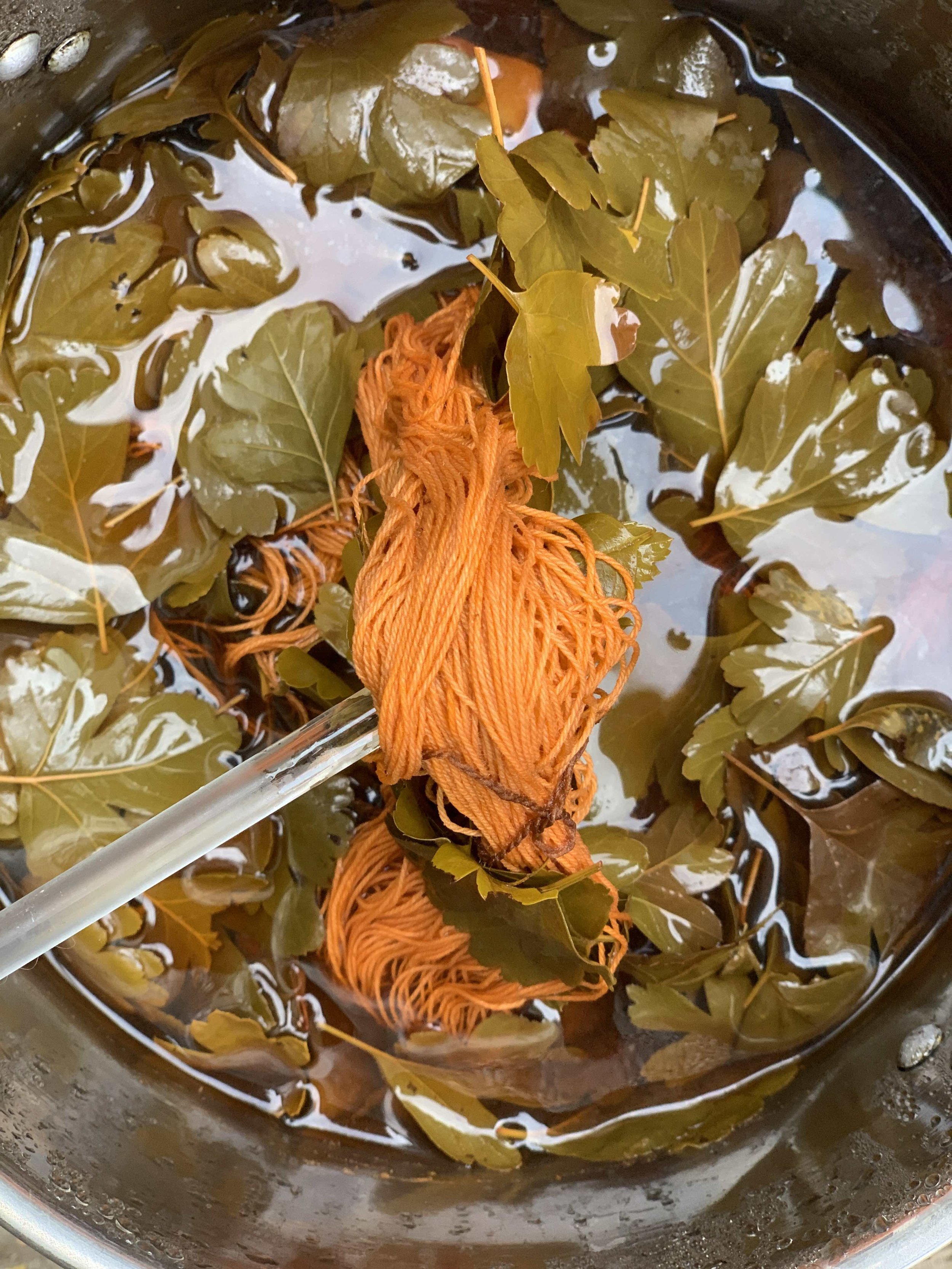
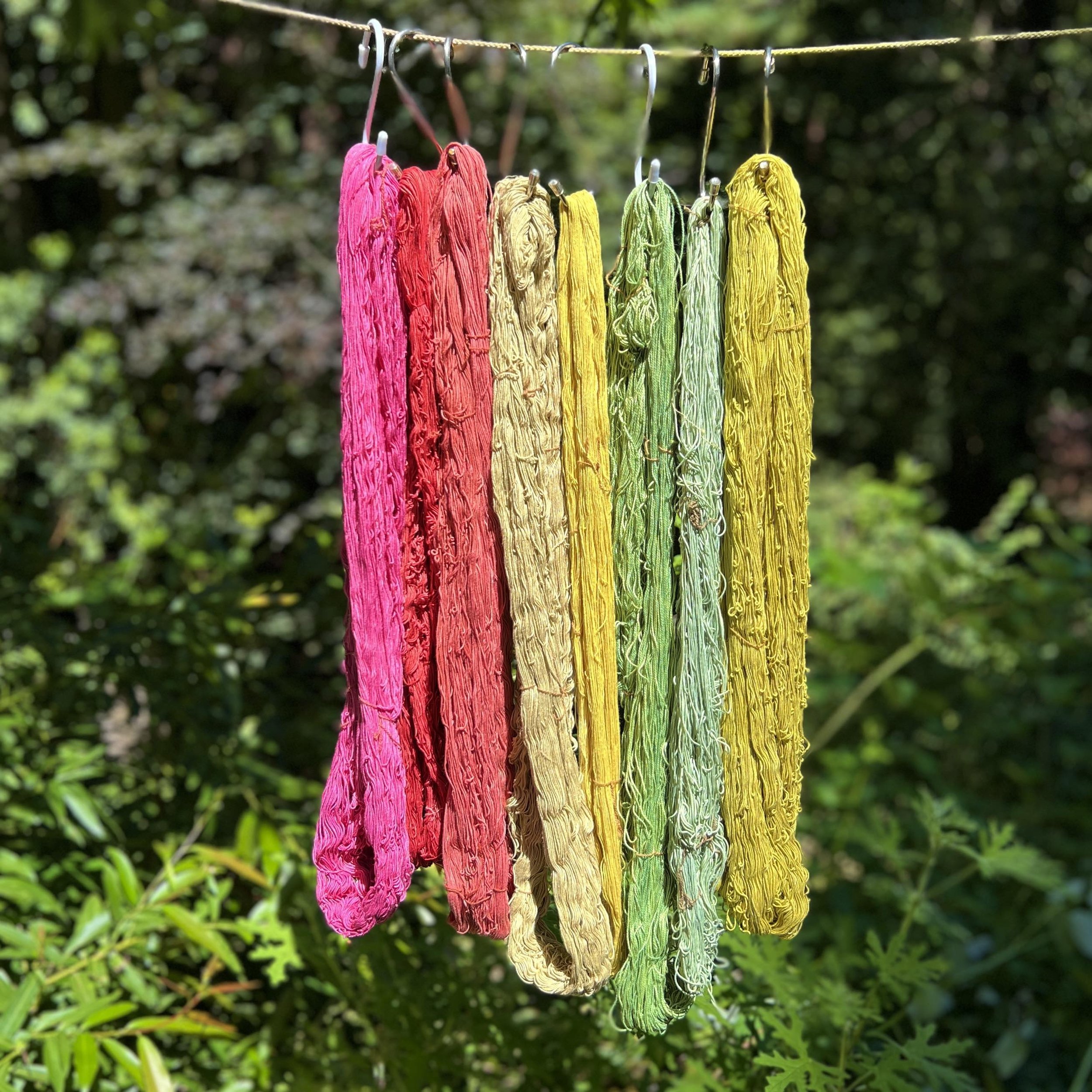
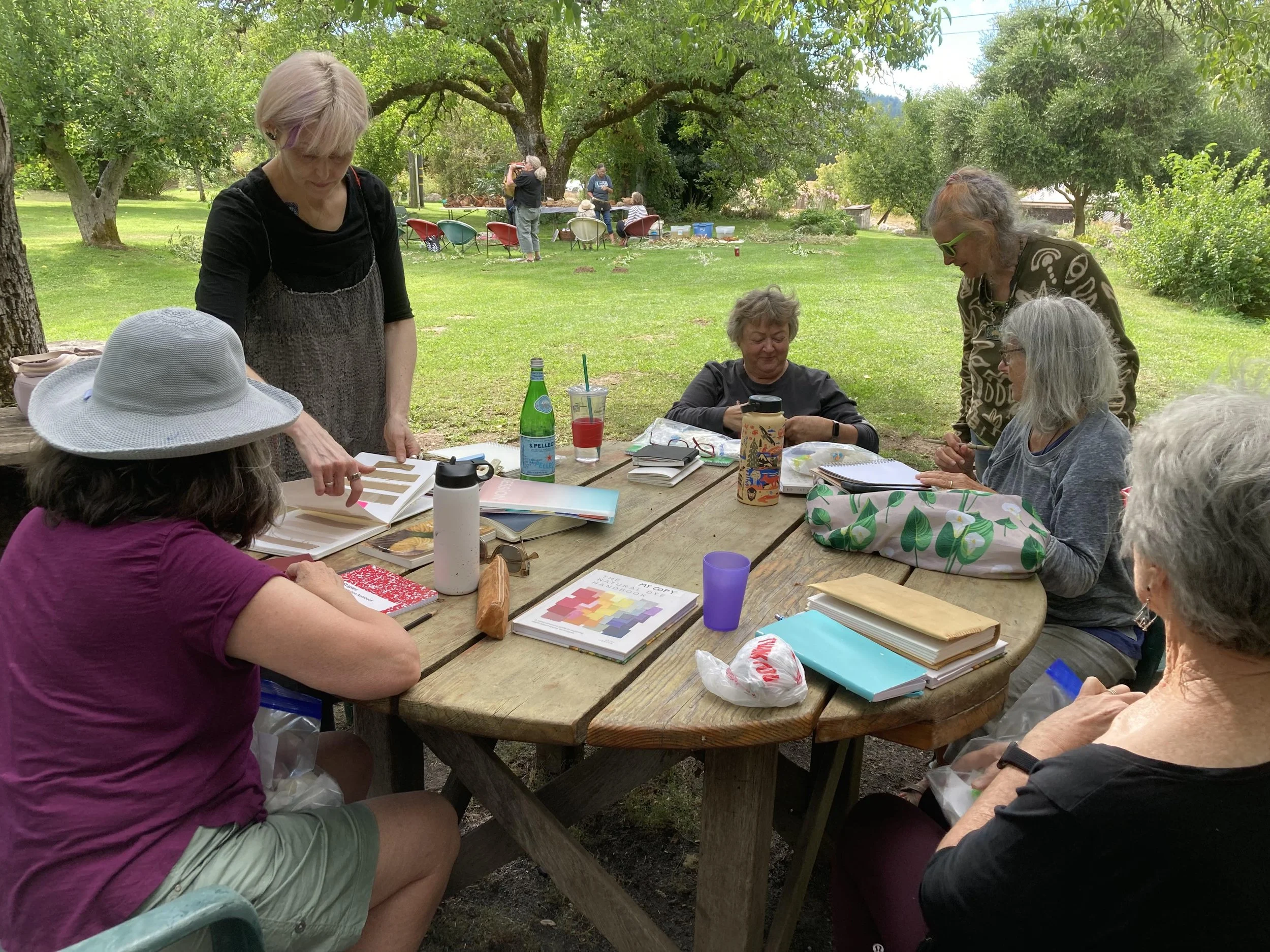
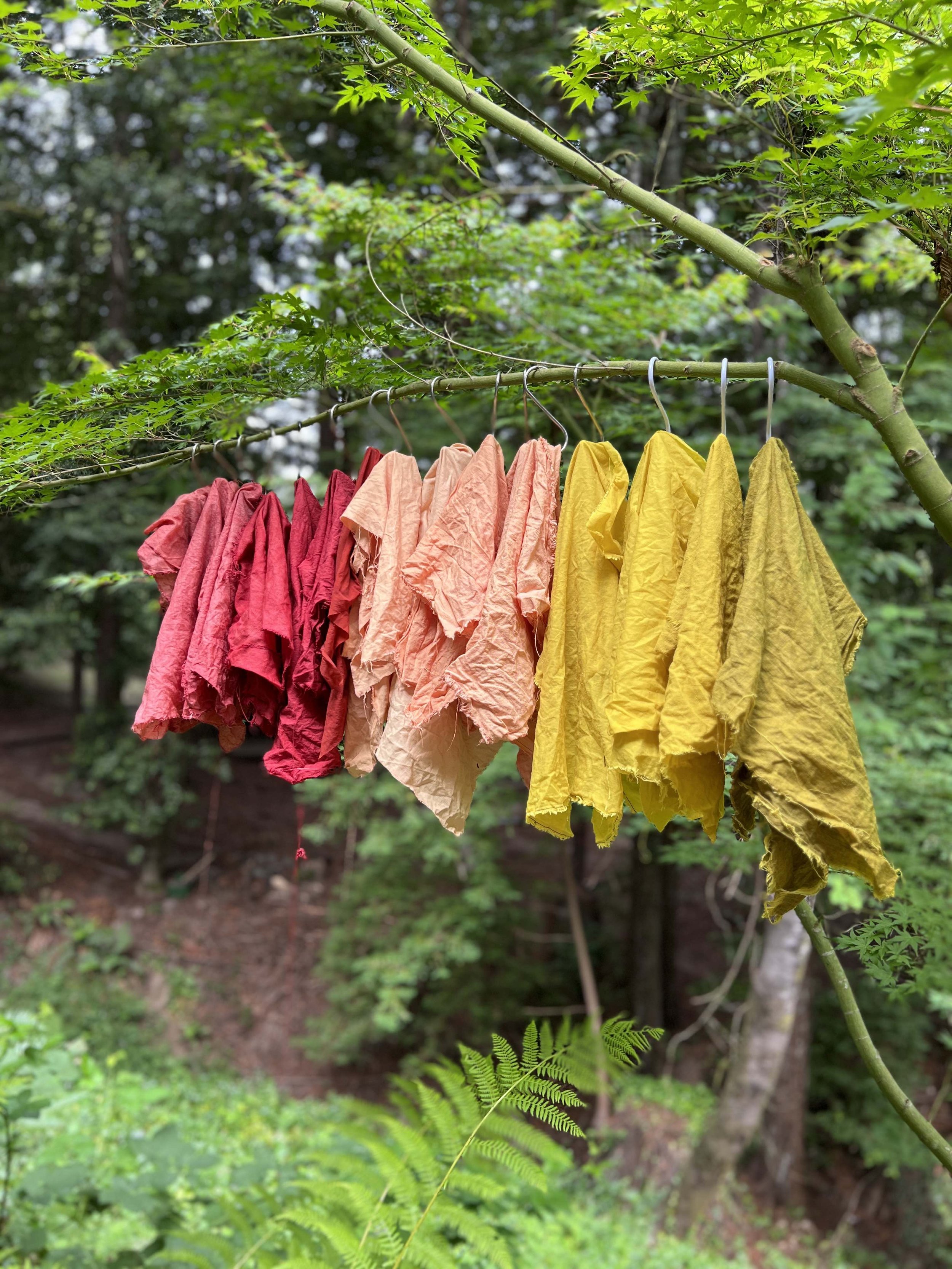
Brief Workshop Description: We will be exploring Emandal's secret colors. During this creative retreat, we will discuss various methods for mordanting cellulose and protein fabrics/fibers using tannins and metal salts. We will forage, gather, and process a range of dye plants. We will document our findings in a dye journal. I will provide cellulose and protein fabric samples mordanted using various methods, allowing you to observe the resulting differences and determine which mordanting method you prefer. I also have tips and tricks for reducing friction in your creative practice, as well as a simple method for keeping track of dye experiments, making it easy to document your dye discoveries. We will not be mordanting any fabric during the retreat, but I’m happy to discuss the different processes and answer any questions.
I will teach you the “folk method” process of natural dyeing. This intuitive dye method is based on general proportions. There is no difficult math involved. You don’t need to weigh everything meticulously. This is the perfect method to use when foraging and experimenting with natural dye plants. You’ll also receive a downloadable PDF with all the information you need to continue your exploration of plants and color. You are welcome to bring containers to take home any leftover dye. Depending on time, we can also modify samples with iron, acid, and alkali after baths.
Depending on time, if you would like to dye more than just the fabric samples included in the materials fee, you are most welcome. Anything you bring must be prepped for dye, clean, washed, and mordanted. We will be using some dyes that don’t require mordanting. You are welcome to bring your pre-mordanted fabric, small accessories such as handkerchiefs or bandannas, and yarn to dye with the leftover dye materials. Some dyes we will be using are high in tannin and do not require mordanting. We can also create larger dye baths using plants that are abundant. Fabric should be no larger than 20”-26” square. All yarn needs to be skeined in hanks so it can be dyed. NO GARMENTS. Please limit it to one or two small items.
If you have specific native or naturalized plants you are curious about, I encourage you to make a list, and we can see if they are available in the landscape.
Levels of Experience: Beginner and beyond.
Additional Supplies Participants Must Bring to Workshop:
Apron to protect your clothes or wear clothes you’re ok with getting messy
Household Rubber Gloves
Small Pruners or Garden Scissors
Garden Gloves if you are prone to getting rashes when touching plants
Journal/notebook(dye journal) If you don’t already have one and are wondering what to get please email me.
Watercolors, colored pencils or drawing supplies if you want to sketch or illustrate any of the plants.
Pen or Pencil
Sun Hat
Sun Block
Optional: If you want to make Homemade Iron Water, please bring a mason jar, lid, and a handful of rusty objects.
Additional Supply Fee Payable to Instructor (if applicable): Materials fee of $25 payable to the instructor.
Where else have you taught this workshop or a similar course?: I've taught similar workshops at the Fibershed Learning Center in Point Reyes Station, CA.
The Natural Dye Handbook: A comprehensive guide to dyeing with plants for beginners and beyond by Heidi Iverson is available for purchase from Heidi through her website.
Website: honeyfolkclothing.com